
FULL STATEMENT:
The Immigration and Asylum Bill, debated on Monday 13 July 2026, marks a serious escalation of an already invasive and undignified regime on migrants, rooted in surveillance, eroding basic rights, criminalisation, and deservingness falsehoods.
Human Rights Erosion: Article 8
This erosion of rights is most stark in the Bill’s attack on Article 8 of the European Convention on Human Rights (ECHR) – the right to family and private life.
The government claims Article 8 is being used to ‘exploit the system’. Family and private life are not loopholes, they are basic rights. And with only a small share (11%) of Article 8 appeals succeeding, the government is now moving to strip that protection away altogether, so that appeals have no ground to stand on.
Criminalisation and Justifying Exclusion
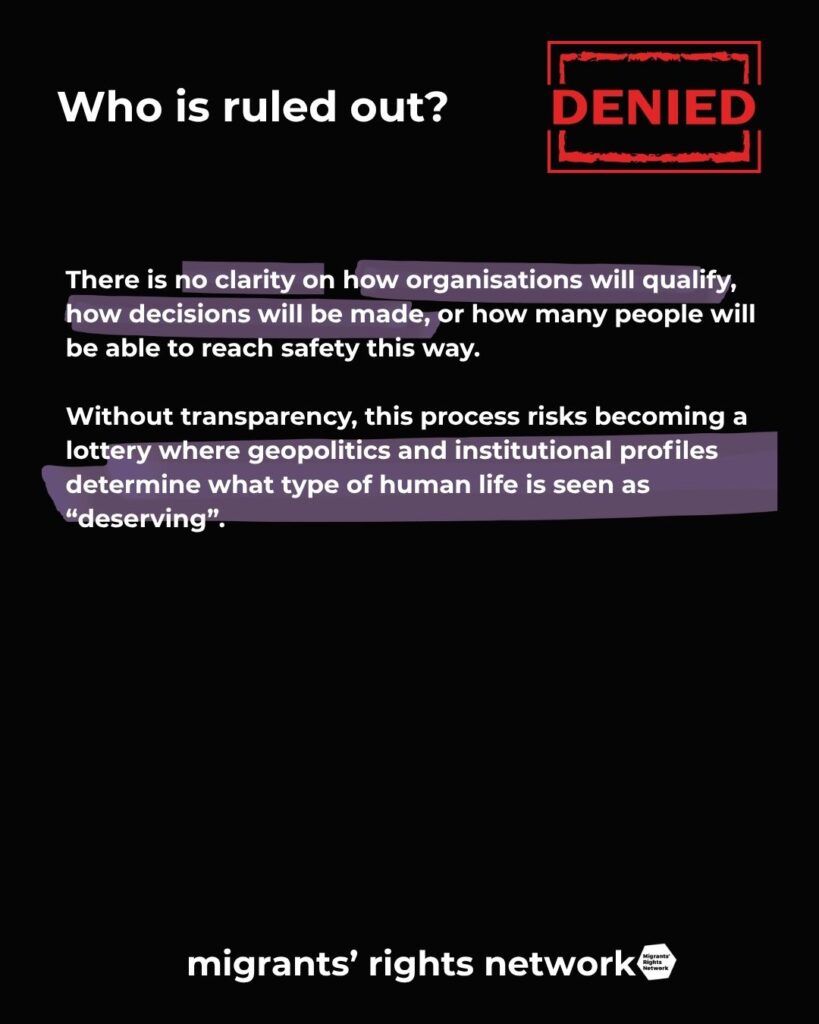
Another proposed change is to deny some people refugee status where there are “reasonable grounds” for treating this person as a “danger” to national security, or where they have been convicted of a “particularly serious crime”, and therefore “constitutes a danger to the community” of the UK. These are intentionally vague, broad and ill-defined thresholds. In practice, they give the Government wide discretion to label people as threats, and to strip them of protection.
This sits within a wider pattern of deliberate criminalisation, where people seeking safety are recast as offenders, whether through prosecutions or retrospective “good character” requirements that punish how someone arrived. Those most affected are often young men, sometimes still children, seeking safety, which is deliberately obscured by the language of criminality.
Good vs Bad Migrant – Collapsing Migration with Punishment
This draws on decades of restrictive, racist and purposefully vague ‘good character’ requirements (broken down in our Words Matter work) that govern applications for immigration, settlement and citizenship purposes.
This sits particularly with the “conduciveness to the public good” (also unpacked in our Words Matter work) aspect of the requirement.
This requires people’s applications to be automatically rejected using criteria that is much looser than a criminal conviction or prison sentence – just the judgement that their ‘presence in the UK poses a threat to UK society’.
The use of these principles, which rely on arbitrary criteria, restrict refugee protection to people who would otherwise have a valid claim, putting people at risk of immense harm.
Fundamentally, these measures create a hierarchy of belonging, where migrants are subjected to a double standard of punishment, permanently undeserving of rights, and stripped of access to human rights protections that the UK is bound to guarantee under international human rights and refugee law, including the ECHR and the 1951 Refugee Convention.
Human rights must be universal, not conditional, and not restricted by governments that dehumanise migrants to enforce harmful, racist agendas. When the Government creates categories of people who are excluded from protection, it weakens those protections for everyone.
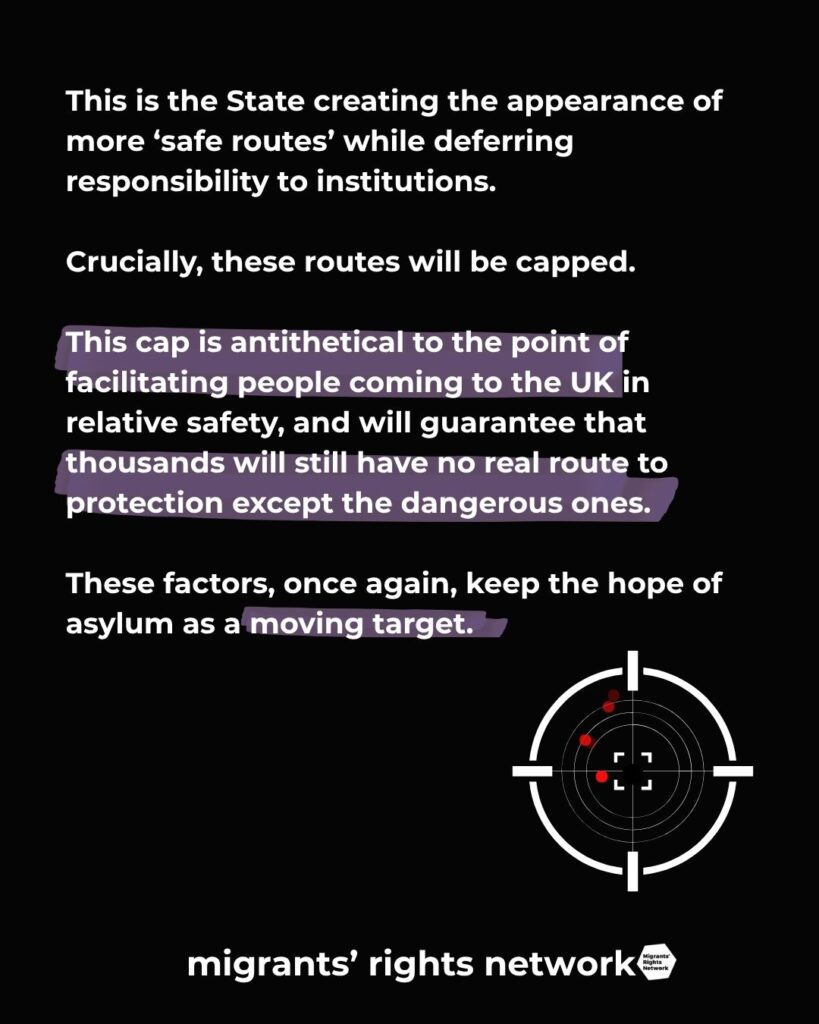
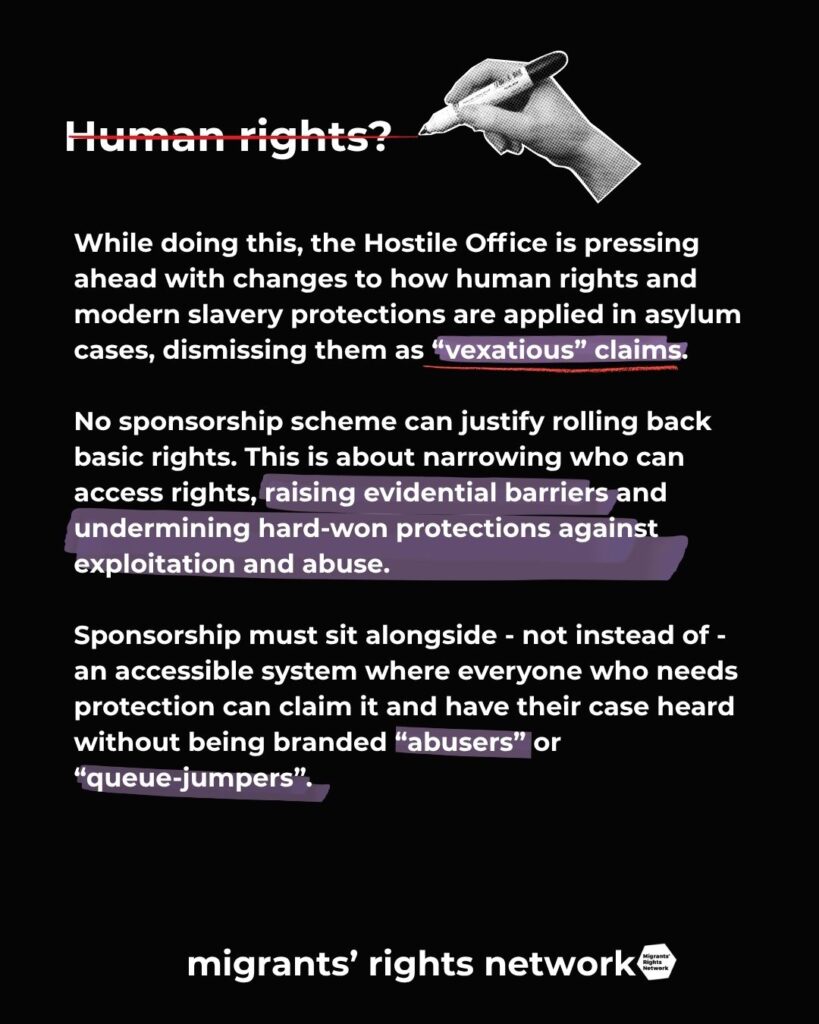
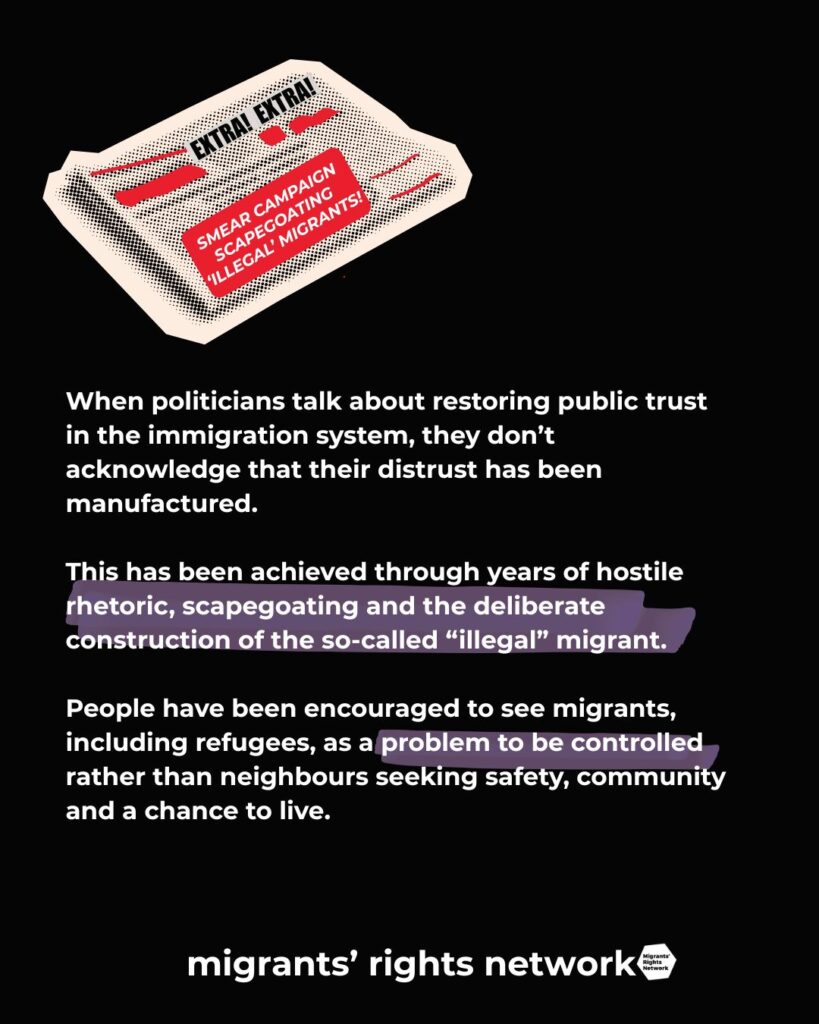
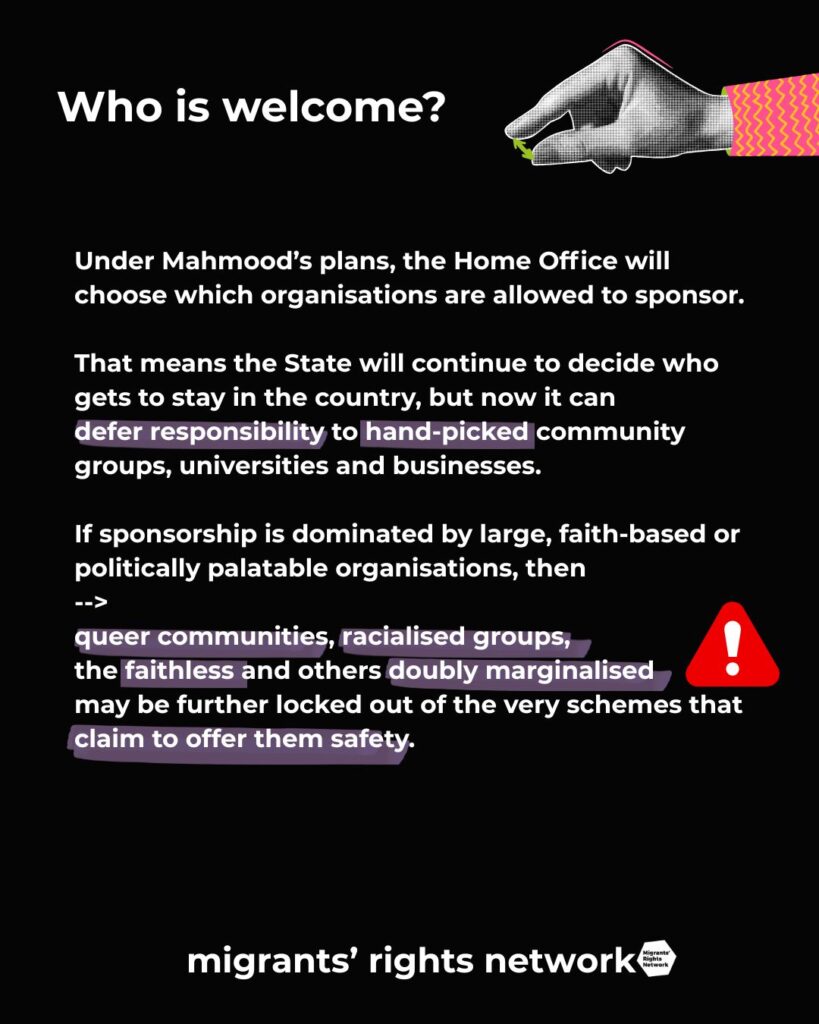
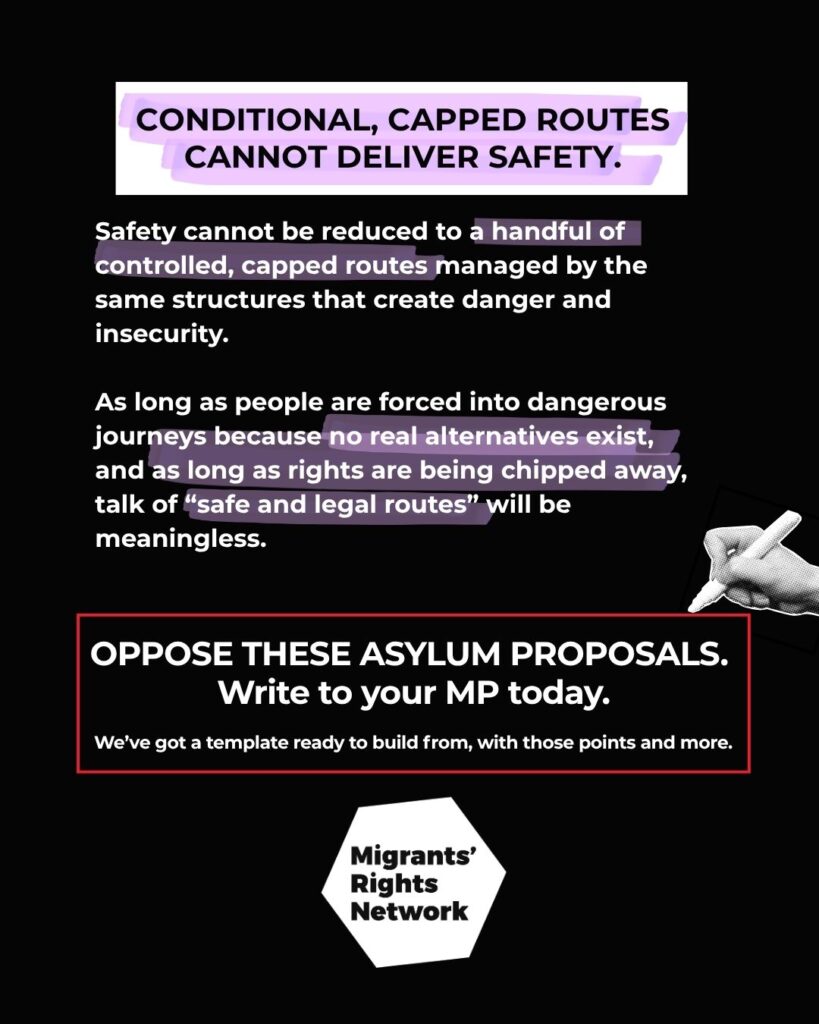
🔴 We are calling on MPs, civil society organisations, and the public to reject this escalation of harm. This Bill must be opposed at every stage.
✊ MPs must challenge and vote against provisions that undermine human rights protections, including restrictions on Article 8 and expanded discretionary powers to exclude people from refugee protection.
✊ Civil society must resist the normalisation of “good vs bad migrant” narratives and expose how these policies criminalise people seeking safety.
✊ The public must stand against a system that makes rights conditional and demand an immigration system rooted in dignity, fairness, and accountability.
This is a final moment for us to oppose good vs bad migrant policies and protect human rights for all.
Migrants’ Rights Network – migrantsrights.org.uk